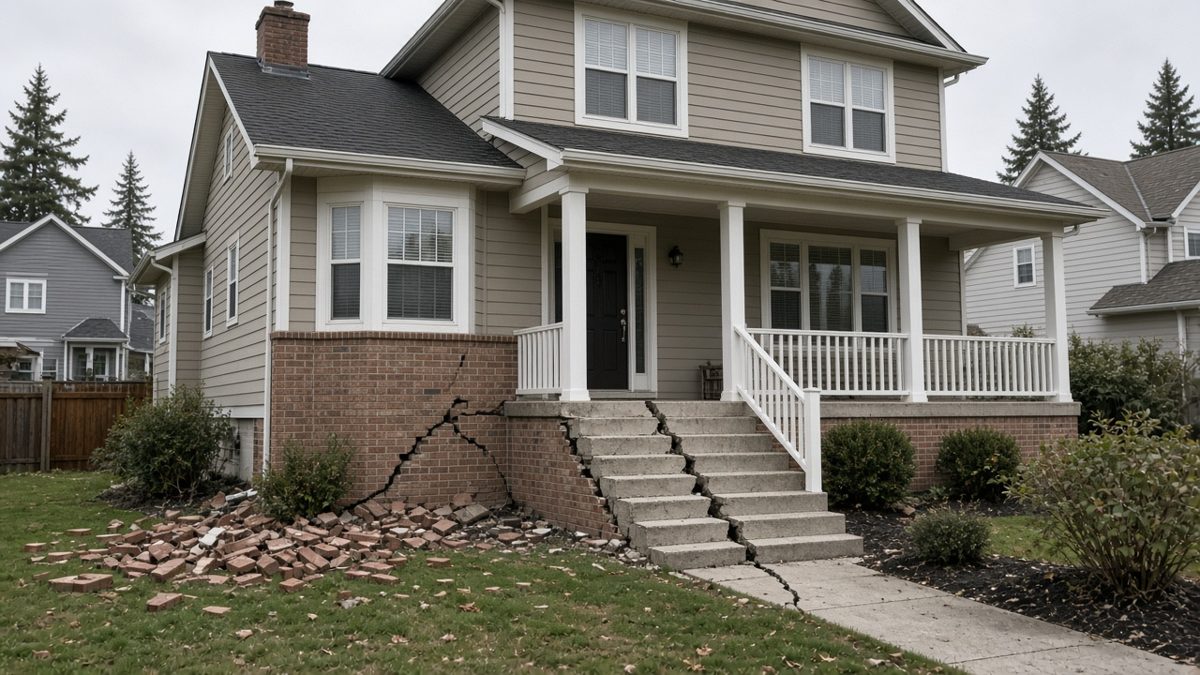
Most homeowners assume their insurance policy will rebuild the house after any disaster. For earthquakes, that assumption is usually wrong. A standard homeowners policy in the United States excludes “earth movement,” which means the shaking, cracking, and collapse caused by an earthquake are not covered unless you have bought separate protection. Earthquake insurance fills that gap, but it has its own pricing, its own deductibles, and its own fine print. This guide explains how earthquake insurance works, what it typically pays for, and how to decide whether it is worth buying where you live.
Why standard homeowners insurance excludes earthquakes
Homeowners policies are built to cover common, independent losses such as a kitchen fire, a burst pipe, or a theft. Insurers can price those risks because they are spread across many households and rarely strike everyone at once. A major earthquake is different. It can damage tens of thousands of homes in a single morning, concentrating losses in one region. To keep ordinary premiums affordable, insurers carve earth movement out of the base policy and sell it separately, where it can be priced and reinsured on its own.
The exclusion is broad. It usually covers earthquakes, landslides, mudflows, sinkholes, and ground settling. There is one important exception: fire following an earthquake is generally covered by a standard homeowners policy. If shaking ruptures a gas line and the house burns, the fire damage falls under your regular coverage, while the structural damage from the shaking itself does not.
What earthquake insurance covers
An earthquake policy or endorsement typically mirrors the main parts of a homeowners policy, though the limits and deductibles may be set separately for each part:
- Dwelling coverage. Pays to repair or rebuild the structure of the house, including the foundation, walls, roof, and attached structures, up to the policy limit.
- Personal property coverage. Pays to repair or replace belongings such as furniture, electronics, and clothing damaged by the quake. Many policies let you choose a lower limit for contents than for the dwelling.
- Loss of use or additional living expenses. Pays for a hotel, rental, meals, and other extra costs if your home is unlivable while it is being repaired.
- Building code upgrades. Some policies include a limited amount for bringing repaired portions of the house up to current building codes, which can be a significant cost in older homes.
Coverage for detached structures, swimming pools, landscaping, masonry veneer, and fences is often limited or excluded. If those items matter to you, read the declarations page and the exclusions section closely before you buy.
Common exclusions inside earthquake policies
Even a dedicated earthquake policy will not pay for everything. Typical exclusions include flood or tsunami damage triggered by an earthquake, which requires a separate flood policy; damage that existed before the earthquake; and certain items such as vehicles, which are covered under the comprehensive portion of an auto policy instead. Some policies also limit coverage for breakable items such as glassware and artwork unless you add a special endorsement.
How earthquake insurance deductibles work
The deductible is the single most important feature to understand, because it works differently from the flat-dollar deductible on most homeowners policies. Earthquake deductibles are usually a percentage of the coverage limit, not a fixed amount. Common options range from about 5% to 25%.
The percentage is generally applied to the dwelling limit, not to the size of the loss. That distinction matters a great deal.
| Dwelling limit | Deductible percentage | Deductible amount |
|---|---|---|
| $400,000 | 10% | $40,000 |
| $400,000 | 15% | $60,000 |
| $600,000 | 10% | $60,000 |
| $600,000 | 20% | $120,000 |
A simple example
Suppose your home is insured for $500,000 with a 15% deductible. Your deductible is $75,000. If an earthquake causes $50,000 in cracked drywall, broken chimneys, and foundation repairs, the policy pays nothing, because the loss is below the deductible. If a stronger quake causes $200,000 of damage, you pay the first $75,000 and the insurer pays $125,000.
This is why many homeowners describe earthquake insurance as catastrophe coverage. It is not designed to pay for minor cosmetic damage. It is designed to keep you from losing the house entirely after a severe event. Some insurers offer separate, lower deductibles for contents or loss of use, or waive the deductible for additional living expenses, so compare those details across quotes.
Where to buy earthquake insurance
There are three main routes:
- An endorsement on your homeowners policy. Some insurers will add earthquake coverage to your existing policy for an extra premium. This keeps everything in one place, but not every insurer offers it, especially in high-risk areas.
- A standalone policy from a private insurer. Several private carriers and surplus lines insurers sell separate earthquake policies, sometimes with more flexible limits and deductibles.
- The California Earthquake Authority. In California, the CEA is a publicly managed, privately funded organization that sells residential earthquake policies through participating insurers. If you have a homeowners, condo, mobile home, or renters policy with a participating company, you can typically buy a CEA policy through that same insurer. California law also requires residential property insurers to offer earthquake coverage to their homeowners customers, though buying it is optional.
Outside California, availability varies. Homeowners in the Pacific Northwest, Alaska, Utah, Nevada, and areas near the New Madrid Seismic Zone in the central United States can usually find coverage, but options and prices differ widely by insurer and location.
What earthquake insurance costs
Premiums depend on several factors, and quotes for similar homes can vary considerably:
- Location and soil. Proximity to known faults and the type of soil under the home have a large effect. Soft or filled soil can amplify shaking.
- Age and construction. Older homes built before modern seismic codes typically cost more to insure. Wood-frame houses tend to perform better in earthquakes than unreinforced masonry, which carries some of the highest rates.
- Foundation and retrofitting. Homes that are bolted to their foundations and have braced cripple walls usually qualify for lower rates.
- Deductible and limits. A higher deductible lowers the premium. Lower contents and loss-of-use limits lower it further.
Because pricing is so location-specific, the most reliable approach is to request quotes from your current insurer and at least one or two other sources. In California, the CEA offers an online premium calculator that lets you test different deductibles and coverage levels.
Retrofitting discounts and grants
Seismic retrofitting can reduce both your risk and your premium. A common retrofit for older wood-frame homes involves bolting the house to its foundation and bracing the short “cripple” walls in a crawl space. These upgrades help prevent the house from sliding off its foundation during shaking.
The CEA offers premium discounts for qualifying retrofitted homes. California also operates the Earthquake Brace + Bolt program, which provides grants toward the cost of a code-compliant retrofit in eligible ZIP codes. Grant amounts and eligible areas change from year to year, so check the program’s official website for current details. Outside California, some local governments and utilities have run similar mitigation programs, and your insurer may offer a discount if you document the work.
Is earthquake insurance worth it?
There is no single answer, but several questions can guide the decision.
How much risk does your area carry?
The US Geological Survey publishes national seismic hazard maps that show the relative chance of strong shaking across the country. If you live in a high-hazard area, a damaging earthquake during the time you own the home is a realistic possibility rather than a remote one.
Could you rebuild without insurance?
Ask what would happen if your house were severely damaged tomorrow. Federal disaster assistance after an earthquake is generally limited and often comes in the form of loans rather than grants. FEMA’s Individuals and Households Program is not designed to fully rebuild a home. If losing the structure would wipe out most of your net worth, insurance deserves serious consideration.
What about your mortgage?
Your mortgage does not disappear if the house is damaged. You would still owe the full loan balance while paying for repairs or a place to live. Lenders typically do not require earthquake coverage the way they may require flood insurance in a designated flood zone, so the decision is usually yours alone.
Can you afford the deductible?
A policy with a $75,000 deductible protects against catastrophe but leaves you responsible for a large first layer of loss. Some homeowners set aside savings specifically to cover the deductible. Others choose a lower deductible and accept a higher premium.
Earthquake insurance for condo owners and renters
Condo owners face a two-layer problem. The condo association’s master policy may or may not include earthquake coverage, and even when it does, the association can levy a special assessment on unit owners to cover its deductible. Some earthquake policies for condo owners include loss assessment coverage that helps pay your share of such an assessment. Ask your association for a copy of its master policy summary before you buy.
Renters do not need to insure the building, but they can buy earthquake coverage for personal property and additional living expenses. These policies tend to be inexpensive relative to homeowner coverage.
How to file an earthquake claim
If an earthquake damages your home, take these steps:
- Make sure everyone is safe, and stay out of the building if it appears structurally unsound.
- Shut off gas if you smell it or suspect a leak, and only if it is safe to do so.
- Photograph and video all damage before cleaning up, including cracks in walls, foundations, and chimneys.
- Contact your insurer as soon as possible to open a claim. After a major quake, insurers receive large numbers of claims at once, so early filing helps.
- Keep receipts for emergency repairs, hotel stays, and meals, since loss-of-use coverage may reimburse them.
- Make temporary repairs to prevent further damage, such as covering broken windows, but avoid major permanent work until an adjuster has inspected the property.
Keep in mind that aftershocks can cause additional damage. Ask your insurer how it treats damage from aftershocks, since many policies treat shaking within a set period, often 72 hours or more, as a single event subject to one deductible.
Practical checklist before you buy
- Confirm whether your current homeowners policy excludes earth movement, which it almost certainly does.
- Get quotes at several deductible levels so you can see how the premium changes.
- Check whether the dwelling limit reflects the true cost to rebuild, not the market value of the home.
- Ask about retrofitting discounts and whether a home inspection is needed to qualify.
- Read the limits for contents, loss of use, and code upgrades, not just the dwelling limit.
- If you own a condo, review the association’s master policy and its deductible.
Related reading: Pet Insurance Explained: How Policies Pay, What They Exclude, and Whether It Pays Off.
Frequently Asked Questions
Does homeowners insurance cover earthquake damage?
No. Standard homeowners policies in the US exclude earth movement, including earthquakes. Fire caused by an earthquake is usually covered, but structural damage from the shaking requires a separate earthquake policy or endorsement.
How does an earthquake insurance deductible work?
Earthquake deductibles are usually a percentage of the coverage limit, often between 5% and 25%. On a home insured for $500,000 with a 10% deductible, you would pay the first $50,000 of covered damage before the policy pays.
Is earthquake insurance required by mortgage lenders?
Lenders generally do not require earthquake coverage, unlike flood insurance in high-risk flood zones. Buying it is typically a personal decision based on your risk and finances.
Can I get earthquake insurance outside California?
Yes. Many private insurers sell earthquake coverage in other states, either as an endorsement or as a standalone policy. Availability and pricing vary by location and insurer, so request several quotes.
Does retrofitting lower earthquake insurance premiums?
Often, yes. Bolting a house to its foundation and bracing cripple walls can qualify for premium discounts with some insurers, including the California Earthquake Authority, and may qualify for state retrofit grants.
This article is for general informational purposes only and is not legal, medical, tax, or financial advice. Rules vary by state and change over time; confirm details with the relevant agency or a licensed professional.