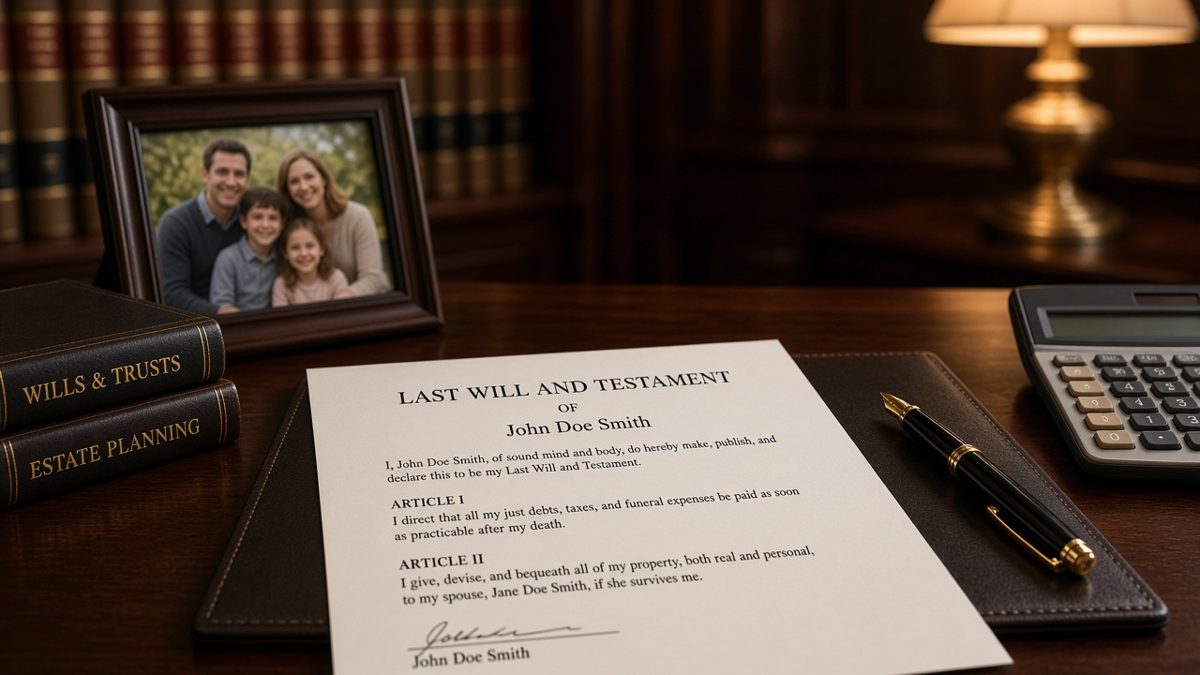
The federal estate tax affects a small share of American households, but for those it does reach, the bill can be large. Understanding the estate tax exemption, how it interacts with gifts, and how married couples can combine their exemptions helps families plan with confidence. It also helps many people realize they do not need to worry about federal estate tax at all, while still paying attention to state taxes. This guide explains how the estate tax exemption works in the United States.
What the federal estate tax is
The federal estate tax is a tax on the transfer of property at death. It is calculated on the taxable estate, which starts with the fair market value of everything the person owned or had certain interests in at death, including:
- Real estate and business interests.
- Cash, stocks, bonds, and retirement accounts.
- Life insurance proceeds, if the deceased owned the policy or had incidents of ownership.
- Certain trusts and annuities.
Deductions are then subtracted, including debts, funeral and administration expenses, transfers to a surviving spouse, and charitable bequests. The tax is owed only on the amount above the available exemption.
The current exemption amount
Federal law provides a basic exclusion amount, commonly called the estate tax exemption. Under the One Big Beautiful Bill Act enacted in July 2025, the exemption is $15 million per person for 2026, adjusted for inflation in later years. The law removed the scheduled drop in the exemption that would otherwise have taken effect after 2025 under the Tax Cuts and Jobs Act.
Estates above the exemption pay tax on the excess at graduated rates that quickly reach a top rate of 40%.
Example
If a single person dies in 2026 with a taxable estate of $17 million and has made no taxable lifetime gifts, roughly $2 million exceeds the exemption. At a 40% top rate, the estate tax would be roughly $800,000. Exact figures depend on the full calculation on Form 706.
The unified gift and estate tax system
The estate tax and gift tax share a single lifetime exemption. Large gifts made during your lifetime can use up part of the exemption available at death.
The annual gift tax exclusion
Each year, you can give up to the annual exclusion amount to any number of people without using any lifetime exemption or filing a gift tax return. For 2026, the annual exclusion is $19,000 per recipient. Married couples can combine their exclusions, giving $38,000 per recipient, by electing gift splitting.
Payments made directly to a school for tuition or to a medical provider for someone’s care are also excluded from gift tax, with no dollar limit.
Gifts above the annual exclusion
If you give more than the annual exclusion to one person, you generally must file Form 709. You usually owe no gift tax; instead, the excess reduces your remaining lifetime exemption. Only after your lifetime gifts exceed the full exemption would gift tax be due.
Anti-clawback protection
The IRS issued regulations confirming that people who make large gifts under a higher exemption will not be penalized if the exemption is later reduced. Gifts covered by the exemption at the time they were made remain protected.
Portability for married couples
Transfers to a US citizen spouse are generally fully deductible through the unlimited marital deduction, so no estate tax is due at the first spouse’s death on assets left to the survivor.
Portability allows a surviving spouse to use the deceased spouse’s unused exemption, called the DSUE amount. For example, if the first spouse dies with an unused exemption of $15 million, the survivor could potentially shelter their own exemption plus that $15 million.
Portability is not automatic. The executor must elect it by filing a timely Form 706, even if no tax is due. The IRS has provided a simplified method for estates not otherwise required to file to make a late portability election within five years of death. Missing the election can forfeit millions of dollars of exemption.
Non-citizen spouses
The unlimited marital deduction generally does not apply when the surviving spouse is not a US citizen, unless assets pass through a qualified domestic trust. Higher annual gift exclusion limits apply to gifts to a non-citizen spouse.
Filing Form 706
An estate must file Form 706 if the gross estate plus adjusted taxable gifts exceeds the filing threshold, which is the basic exclusion amount for the year of death. It is also filed to elect portability.
- Due date: Nine months after the date of death.
- Extension: An automatic six-month extension to file is available with Form 4768, but tax is still due at nine months unless a separate extension to pay is granted.
- Valuation: Assets are generally valued at the date of death, or the executor may elect an alternate valuation date six months later if it reduces both the estate’s value and the tax.
State estate and inheritance taxes
Even if no federal tax applies, state taxes might. A number of states and the District of Columbia impose their own estate taxes, often with exemptions far below the federal level. Several states also impose inheritance taxes, paid by heirs based on their relationship to the deceased, and at least one state imposes both.
| Type | Who pays | Typical feature |
|---|---|---|
| Federal estate tax | The estate | High exemption, 40% top rate |
| State estate tax | The estate | Lower exemptions in many states |
| State inheritance tax | The heir | Spouses typically exempt; rates vary by relationship |
Because state rules change and differ widely, check your state revenue department’s current guidance.
Step-up in basis
Assets inherited at death generally receive a step-up in basis to fair market value at the date of death. This can eliminate capital gains on appreciation that occurred during the deceased’s lifetime. Assets given during life, by contrast, usually keep the donor’s original basis. This difference is a key consideration when deciding whether to give appreciated assets now or leave them at death.
The generation-skipping transfer tax
A separate tax, the generation-skipping transfer tax, applies to transfers to grandchildren or others more than one generation below the giver, whether made during life or at death. It exists so families cannot avoid a layer of estate tax by skipping a generation. The GST tax has its own exemption, generally equal to the basic exclusion amount, and a flat rate equal to the top estate tax rate. Unlike the estate tax exemption, the GST exemption is not portable between spouses, so couples who plan large gifts to grandchildren often address it with trusts.
Retirement accounts and income tax
Retirement accounts such as traditional IRAs and 401(k)s are included in the taxable estate, and they do not receive a step-up in basis. Heirs generally owe income tax on withdrawals from inherited pre-tax accounts, and most non-spouse beneficiaries must empty the account within 10 years. An estate that owes no estate tax may still pass along a significant income tax liability, so beneficiary designations deserve attention in any plan.
Common planning strategies
- Annual exclusion gifts to reduce the estate over time.
- Spousal planning using portability or credit shelter trusts.
- Irrevocable life insurance trusts to keep policy proceeds out of the taxable estate.
- Charitable giving through bequests or charitable trusts.
- Valuation strategies for family businesses, such as discounts for lack of control, subject to IRS scrutiny.
These strategies have legal and tax complexities, so work with an estate planning attorney and a tax professional.
Related reading: Earned Income Tax Credit: Who Qualifies, How It Is Figured, and How to Claim It Correctly and Home Office Deduction: Who Qualifies and How to Calculate It.
Frequently Asked Questions
What is the federal estate tax exemption for 2026?
It is $15 million per person, adjusted for inflation in later years. A married couple can effectively shelter about $30 million using portability.
How much is the estate tax rate?
Amounts above the exemption are taxed at graduated rates that reach a top rate of 40%.
Do I have to pay tax on gifts?
Gifts up to $19,000 per recipient per year are excluded. Larger gifts require Form 709 but usually just reduce your lifetime exemption rather than creating an immediate tax.
What is estate tax portability?
Portability lets a surviving spouse use the unused exemption of the first spouse to die. The executor must elect it on a timely filed Form 706.
Does my state have an estate tax?
Some states and DC impose estate taxes with lower exemptions than the federal amount, and a few impose inheritance taxes. Check your state’s current rules.
This article is for general informational purposes only and is not legal, medical, tax, or financial advice. Rules vary by state and change over time; confirm details with the relevant agency or a licensed professional.