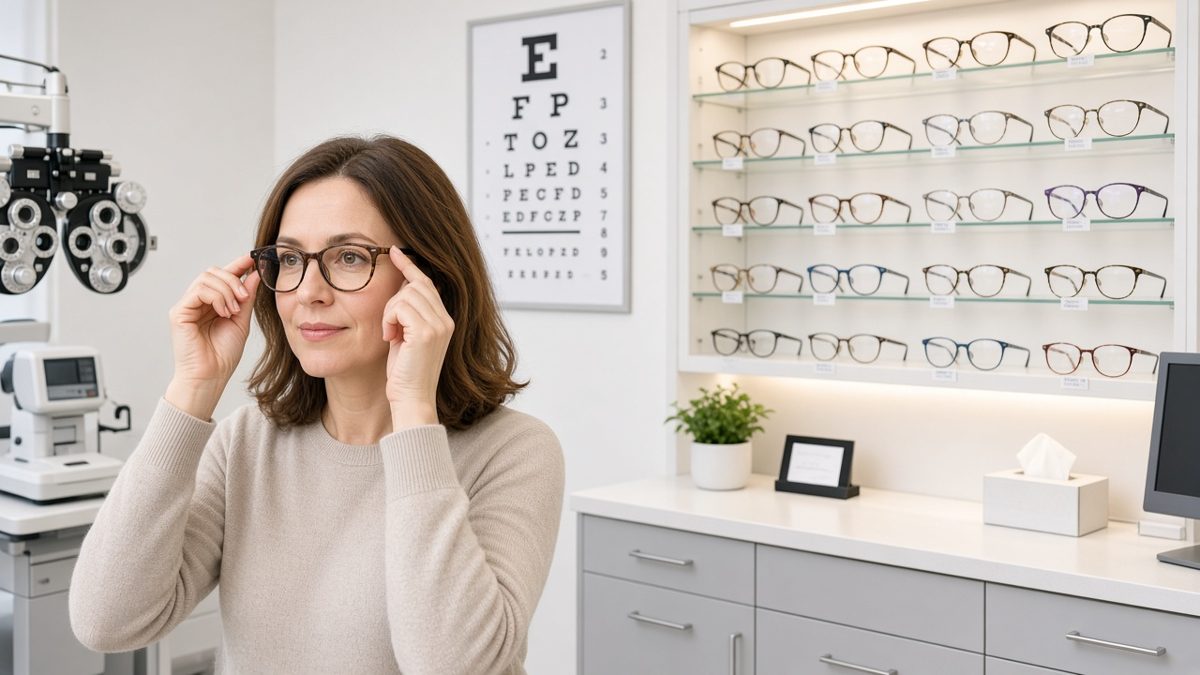
Routine eye care is something most people need, yet it is often not part of standard health insurance for adults. Vision insurance helps pay for eye exams, glasses, and contact lenses in exchange for a premium. Whether it saves money depends on how often you need new glasses or contacts and what plan you can get. This guide explains how vision plans work, what they cover, and how to evaluate one.
How vision insurance works
Most vision plans are offered as separate policies or as a benefit added to dental or health coverage. They are often sold through employers as voluntary benefits, through the Health Insurance Marketplace for children, or directly by insurers.
Typical plans combine:
- A routine eye exam, often once every 12 months, with a small copay
- An allowance for frames, such as a fixed dollar amount every 12 or 24 months
- Coverage for lenses, often with fixed copays for standard lenses and extra costs for upgrades
- An allowance for contact lenses in place of glasses
- Discounts on extras like lens coatings and sometimes on LASIK through partner providers
Vision plans usually work through networks of optometrists, ophthalmologists, and retail optical stores. Out-of-network services may be reimbursed at lower fixed amounts.
Routine vision care vs. medical eye care
This distinction is important.
- Routine vision care, such as a refraction to determine your prescription and buying glasses, is covered by vision insurance.
- Medical eye care, such as treatment for glaucoma, cataracts, diabetic retinopathy, infections, or eye injuries, is generally covered by your health insurance, subject to its deductibles and copays.
If you visit an eye doctor for a medical problem, the visit may be billed to medical insurance even if you also have a vision plan. Ask the office how it will bill the visit.
Typical costs
Premiums vary by plan, employer contribution, and region. Employer-sponsored vision plans are often relatively inexpensive per paycheck, while individual plans cost more. Compare:
- Annual premium
- Exam copay
- Frame and contact lens allowances
- Lens copays and upgrade costs
- Frequency limits for frames and lenses
An example calculation
Suppose an individual plan costs $15 a month, or $180 a year, with a $10 exam copay, a $150 frame allowance every 24 months, and a $25 lens copay. If you get an exam and new glasses every year at a cost of $120 for the exam, $200 for frames, and $150 for lenses without insurance, you would pay $470 out of pocket. With the plan, you might pay $180 in premiums plus $10, $50 for the frame overage, and $25, or $265 total. In a year when you only get an exam, the plan may cost more than paying directly.
Actual figures vary, so run the numbers with your own expected use.
Who benefits most
- People who need new glasses or contacts every year
- Families with children who need regular exams and frequent frame replacements
- People with an employer subsidy that lowers premiums
- People with progressive lenses or other costly lens options, if the plan covers them well
It may be less valuable for people with no vision correction needs, those who buy inexpensive glasses online, or those who can pay with tax-advantaged accounts.
Children’s vision coverage under the ACA
The Affordable Care Act lists pediatric services, including pediatric vision care, as an essential health benefit. Most individual and small-group health plans must include vision coverage for children, typically up to age 19. Adult vision coverage is not an essential health benefit, so adults usually need a separate plan or employer benefit.
Vision coverage and Medicare
Original Medicare does not cover routine eye exams for glasses or contact lenses, or the glasses themselves, with limited exceptions. Medicare Part B does cover:
- An annual glaucoma test for people at high risk
- An annual eye exam for diabetic retinopathy for people with diabetes
- Certain diagnostic tests and treatment for eye diseases
- Cataract surgery, plus one pair of eyeglasses or contact lenses after cataract surgery with an intraocular lens
Many Medicare Advantage plans offer routine vision benefits. Standalone vision plans are also available.
Using HSAs and FSAs
If you have a health savings account or flexible spending account, you can generally use those funds tax-free for eye exams, prescription glasses, contact lenses, contact solution, and corrective surgery such as LASIK. That can be an alternative or supplement to vision insurance. Some employers offer a limited-purpose FSA for dental and vision expenses that can be paired with an HSA.
LASIK and vision plans
Most vision plans do not cover LASIK in full, but many offer discounts through partner surgeons. Because LASIK is elective, health plans usually do not cover it. Paying with HSA or FSA funds can reduce the after-tax cost.
How to choose a vision plan
- Check the network for your preferred eye doctor or retailer, including online retailers.
- Compare allowances with the actual price of frames you typically buy.
- Review lens coverage, including progressive lenses and coatings.
- Look at frequency limits, such as frames every 12 vs. 24 months.
- Consider contacts if you wear them; allowances vary widely.
- Calculate break-even by comparing annual premiums with expected savings.
- Check waiting periods, which are uncommon for vision plans but possible.
Understanding lens options and add-ons
Plans often cover basic single-vision, bifocal, and trifocal lenses with a copay, but many popular features cost extra. Common add-ons include:
- Anti-reflective coatings, which reduce glare from screens and headlights
- Progressive lenses, which provide a gradual transition between distance and near vision without visible lines
- High-index lenses, which are thinner for strong prescriptions
- Photochromic lenses, which darken in sunlight
- Scratch-resistant and UV coatings, which some plans include
Plans may list fixed copays for these upgrades or offer a percentage discount. If you need progressives or high-index lenses, compare these schedules carefully, as they can matter more than the frame allowance.
Ordering glasses and contacts online
Many vision plans now accept claims from online retailers, either in network or through out-of-network reimbursement. To use out-of-network benefits, you usually pay up front and submit an itemized receipt with a claim form. Reimbursement amounts are often fixed, such as a set dollar amount for frames or lenses, so check the schedule first.
Eye exam frequency recommendations
How often you should have an eye exam depends on your age, risk factors, and existing conditions. People with diabetes, a family history of glaucoma, or high prescriptions may need more frequent exams. Ask your eye doctor what schedule is appropriate for you, and confirm how often your plan covers routine exams. Regular comprehensive exams can detect conditions such as glaucoma and macular degeneration that may not cause symptoms early.
Vision insurance through COBRA and retirement
If you leave a job, you may be able to continue employer vision coverage through COBRA, usually at full cost plus an administrative fee. Because individual vision plans are widely available, compare COBRA premiums with standalone options. Retirees may find vision plans through former employers, Medicare Advantage, or individual insurers; review the network and allowances before enrolling.
Related reading: Medicare IRMAA: How Income-Related Surcharges Work and How to Appeal Them.
Frequently Asked Questions
Does health insurance cover eye exams?
Health insurance generally covers medical eye exams for diseases and injuries. Routine vision exams for adults usually require vision insurance or out-of-pocket payment.
Does Medicare cover glasses?
Original Medicare generally does not, except for one pair after cataract surgery with an intraocular lens. Many Medicare Advantage plans offer vision benefits.
Is vision insurance worth it?
It often pays off if you need new glasses or contacts every year or have an employer subsidy, but may not if you rarely need eyewear.
Can I use an HSA for glasses?
Yes. Prescription glasses, contacts, and eye exams are generally qualified medical expenses.
Do children get vision coverage automatically?
Most ACA-compliant individual and small-group health plans must include pediatric vision benefits.
This article is for general informational purposes only and is not legal, medical, tax, or financial advice. Rules vary by state and change over time; confirm details with the relevant agency or a licensed professional.