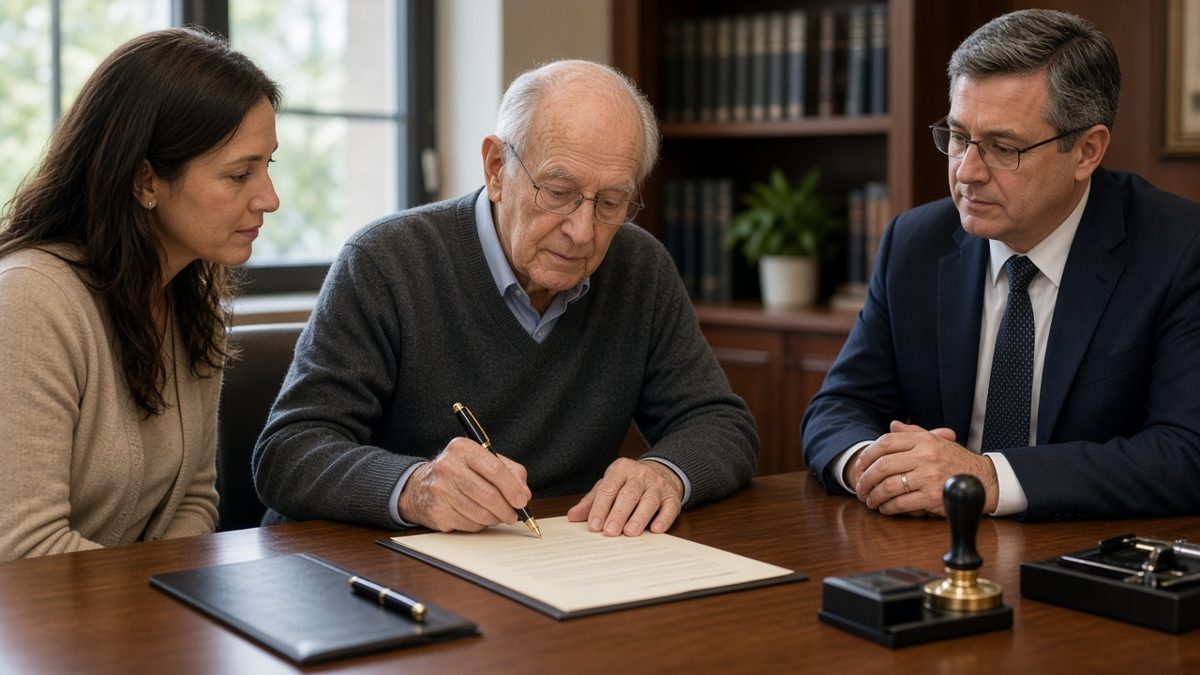
Most people plan for what happens after death, with a will or a trust. Far fewer plan for a period when they are alive but unable to manage their own affairs because of an accident, illness, or dementia. A durable power of attorney fills that gap. Without one, your family may need to go to court to get authority to pay your bills or sell property. This guide explains how a durable power of attorney works in the United States, the choices you will face when creating one, and how to make sure it actually works when your family needs it.
What a power of attorney is
A power of attorney (POA) is a legal document in which one person, the principal, authorizes another person, the agent or attorney-in-fact, to act on their behalf. The agent does not need to be a lawyer. The authority can be broad, covering nearly all financial matters, or narrow, limited to a single transaction.
Why “durable” matters
Under traditional law, a power of attorney ended automatically if the principal became incapacitated, exactly when it was most needed. A durable power of attorney includes language stating that it remains in effect even if the principal loses mental capacity. Many states have adopted the Uniform Power of Attorney Act, under which a power of attorney is presumed durable unless the document says otherwise. In other states, you need explicit durability language. Because rules differ, always use a form or attorney familiar with your state’s law.
Types of powers of attorney
General financial power of attorney
This grants broad authority over financial matters, such as banking, paying bills, managing investments, filing taxes, and handling real estate. When made durable, it is the core document in most incapacity plans.
Limited or special power of attorney
A limited POA authorizes the agent to handle one task or a defined set of tasks, such as signing closing documents on a home sale while you are traveling. It usually ends when the task is done.
Springing power of attorney
A springing POA takes effect only when a triggering event occurs, typically your incapacity as certified by one or more physicians. It may feel safer because the agent has no authority while you are healthy. In practice, springing powers can cause delays, because banks may demand proof that the triggering condition has occurred, and privacy rules can complicate obtaining medical certifications. Some states do not allow springing powers at all.
Health care power of attorney
Medical decisions are usually handled by a separate document, often called a health care proxy or medical power of attorney. A financial POA does not authorize medical decisions, and vice versa.
What an agent can and cannot do
Typical powers
Depending on the document and state law, an agent may:
- Access bank accounts and pay bills
- Manage investments and retirement accounts
- Buy, sell, or mortgage real estate
- File tax returns and deal with the IRS
- Apply for government benefits such as Social Security or Medicaid
- Manage business interests
“Hot powers” that require specific authorization
Under the Uniform Power of Attorney Act and many state laws, certain powers must be granted expressly because they can significantly change your estate. These often include the power to make gifts, change beneficiary designations, create or amend a trust, change rights of survivorship, and disclaim property. If your plan relies on the agent doing any of these, for example making gifts as part of long-term care planning, the document must say so clearly.
Limits on agents
An agent cannot make or change your will, vote on your behalf in a public election, or act in ways that conflict with their fiduciary duty. They also cannot act after your death. When you die, the POA ends, and your executor or trustee takes over.
The agent’s fiduciary duties
An agent is a fiduciary, meaning they must act in your best interest. Common duties include:
- Acting in good faith and within the authority granted
- Following your known wishes and expectations
- Keeping your money separate from their own
- Keeping records of receipts, payments, and transactions
- Avoiding conflicts of interest and self-dealing
An agent who misuses funds can be held personally liable and may face criminal charges for financial exploitation. Many states allow interested family members or adult protective services to ask a court to review an agent’s conduct.
How to choose an agent
Choosing the right person is more important than any clause in the document. Consider:
- Trustworthiness. The agent will have access to your money.
- Organization. They must track expenses and keep records.
- Availability and location. Many tasks are easier for someone nearby.
- Willingness. Ask the person directly before naming them.
- Family dynamics. Naming one sibling over another can cause friction, so explain your reasons.
Always name at least one successor agent in case your first choice cannot serve. Naming co-agents who must act together can create gridlock; if you name co-agents, specify whether they may act independently.
Making the document valid and usable
Signing requirements
States set their own formalities. Many require notarization, and some also require witnesses. A document affecting real estate may need to be recorded with the county when used. Using your state’s statutory form, where one exists, can make acceptance easier.
Getting banks to accept it
Financial institutions sometimes hesitate to accept a POA, especially an older one. To reduce friction:
- Provide copies to your bank and brokerage in advance and ask whether they need their own forms completed.
- Keep the document reasonably current, refreshing it every several years.
- Under the Uniform Power of Attorney Act, third parties that refuse a properly acknowledged POA without a valid reason may be liable for costs, which gives agents leverage in states that adopted it.
Storing the original
Keep the original in a safe but accessible place and tell your agent where it is. A safe-deposit box can be a problem if only you have access.
Revoking or updating a power of attorney
While you have capacity, you can revoke a POA by signing a written revocation and delivering it to your agent and any institutions that have a copy. Life events such as divorce, a falling-out with the agent, or a move to another state are good reasons to review the document. In many states, divorce automatically revokes a spouse’s designation as agent, but you should not rely on that alone.
What happens without one
If you become incapacitated without a durable POA, your family may need to petition a court for guardianship or conservatorship. That process can be slow, public, and expensive, and the court, not you, chooses who manages your affairs. A durable power of attorney is one of the most cost-effective estate planning documents you can sign.
Frequently Asked Questions
When does a durable power of attorney take effect?
An immediate durable POA takes effect once it is properly signed. A springing POA takes effect only after a stated event, usually a doctor’s certification that you are incapacitated.
Does a power of attorney continue after death?
No. All powers of attorney end when the principal dies. After death, the executor named in the will or the trustee of a trust handles the estate.
Can my agent pay themselves?
Agents can be reimbursed for reasonable expenses and may receive reasonable compensation if the document or state law allows it. Payments must be documented and in your best interest.
Do I need a lawyer to create a durable power of attorney?
It is not always legally required, and many states provide statutory forms. An attorney can help with complex situations, gifting powers, business interests, or blended families.
Is a power of attorney from another state valid?
Most states recognize a POA that was valid where it was signed. Some institutions may still prefer a document prepared under local law, so review it if you move.
This article is for general informational purposes only and is not legal, medical, tax, or financial advice. Rules vary by state and change over time; confirm details with the relevant agency or a licensed professional.