Building a home lets you choose the layout, finishes, and location you want, but it also requires a different kind of financing than buying an existing house. A standard mortgage is secured by a finished home that can be appraised and sold. When you build, the house does not exist yet, so lenders use construction loans that release money in stages as work is completed. These loans have their own rules, costs, and risks. This guide explains how construction loans work, the main types, what lenders require, and how to protect yourself during the build.
What a construction loan is
A construction loan is short-term financing, typically lasting about 12 to 18 months, used to pay for building a home. It can cover land, if not already owned, along with materials, labor, permits, and other building costs. Instead of receiving the full loan amount at closing, the money is paid out in installments, called draws, as the builder completes each phase of construction.
During construction, borrowers usually make interest-only payments on the amount that has been drawn so far. When construction ends, the loan must be repaid, typically by converting to or refinancing into a permanent mortgage.
How the draw process works
Before closing, the lender and builder agree on a draw schedule that ties payments to construction milestones. A typical schedule might look like this:
| Stage | Work completed |
|---|---|
| Draw 1 | Site preparation and foundation |
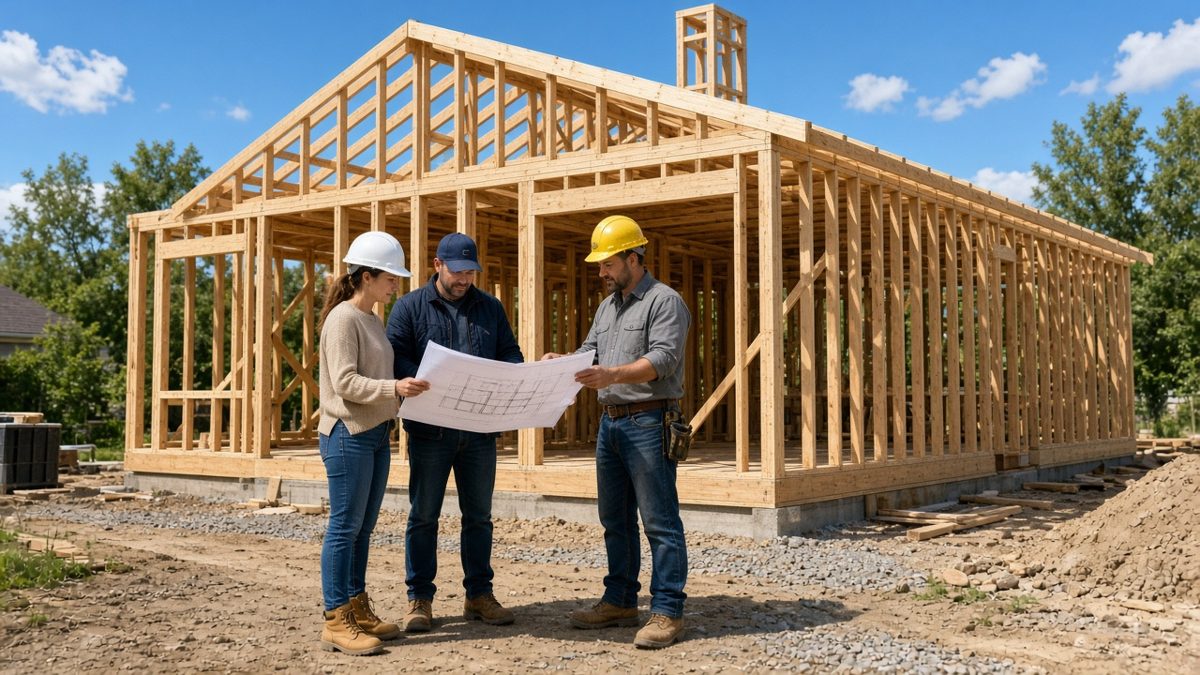
| Draw 2 | Framing and roof |
| Draw 3 | Plumbing, electrical, and HVAC rough-ins |
| Draw 4 | Drywall, interior work, and exterior finishes |
| Draw 5 | Final finishes and certificate of occupancy |
Before each draw, the lender generally sends an inspector to verify the work. Funds are then released to the builder, sometimes after lien waivers are collected to confirm subcontractors and suppliers have been paid.
Interest during construction
Because you pay interest only on funds drawn, payments start small and grow as construction progresses. For example, if $100,000 has been drawn at a 9% annual rate, the monthly interest is about $750. If $300,000 has been drawn, the monthly interest is about $2,250. Rates are illustrative; construction loan rates are often higher than standard mortgage rates and frequently variable during the build.
Main types of construction loans
Construction-to-permanent loan
Also called a single-close or one-time close loan, this combines construction financing and the permanent mortgage into one loan with one closing. After construction ends, the loan converts to a regular mortgage, often 15 or 30 years.
Pros: one set of closing costs, and in many programs the permanent rate can be locked at the start.
Cons: less flexibility to shop for a better permanent rate later, and requirements can be stricter.
Stand-alone construction loan
Also called a two-time close loan, this covers only the construction period. When the home is finished, you take out a separate mortgage to pay it off.
Pros: you can shop for the best permanent mortgage when construction ends, and the initial down payment may be lower in some cases.
Cons: two closings and two sets of closing costs, and the risk that rates rise or your finances change before you qualify for the permanent loan.
Owner-builder construction loan
Some lenders offer loans to borrowers who act as their own general contractor. These are harder to get, since lenders view them as riskier, and usually require proof of building experience or a contractor’s license.
Renovation loans
For major remodels of an existing home, renovation loans such as the FHA 203(k), Fannie Mae HomeStyle, or Freddie Mac CHOICERenovation programs can finance the purchase or refinance plus improvements in one loan. These are separate from new-construction loans.
Government-backed construction loans
- FHA construction-to-permanent loans allow lower down payments, as low as 3.5% for qualified borrowers, with FHA credit and property standards and mortgage insurance.
- VA construction loans can allow eligible veterans and service members to build with no down payment, though fewer lenders offer them.
- USDA construction loans are available in eligible rural areas for borrowers who meet income limits, through approved lenders.
How to qualify
Because construction loans carry more risk than standard mortgages, lenders tend to have stricter requirements:
- Credit score. Many conventional construction lenders look for scores around 680 or higher, though requirements vary and government programs may be more flexible.
- Down payment. Conventional construction loans often require 20% or more down. Land you already own may count toward your equity.
- Debt-to-income ratio. Lenders typically prefer a DTI of 43% or lower.
- Detailed plans and budget. You will need architectural plans, specifications, a line-item cost breakdown, and a construction contract.
- An approved builder. Lenders review the builder’s license, insurance, experience, and finances.
- Appraisal. The appraiser estimates the home’s value once completed, based on the plans, which determines how much the lender will lend.
- Reserves. Some lenders want cash reserves to handle overruns.
Costs to budget for
- Interest-only payments during construction
- Closing costs, which can be paid once or twice depending on loan type
- Inspection and draw fees
- Contingency reserve, often around 5% to 10% of construction costs, for overruns
- Builder’s risk insurance, which covers the home while it is under construction
- Permits, utility connections, and impact fees
Fixed-price vs. cost-plus contracts
The type of building contract affects how much risk you carry. Under a fixed-price contract, the builder agrees to complete the home for a set amount, and the builder generally absorbs overruns unless you request changes. Lenders often prefer fixed-price contracts because the budget is more predictable. Under a cost-plus contract, you pay the actual cost of materials and labor plus a fee or percentage for the builder. Cost-plus contracts can be more transparent and flexible, but the final price is less certain, so a larger contingency is wise. Whichever you choose, the contract should spell out allowances for finishes, how change orders are priced and approved, the completion timeline, and the warranty.
Construction loans vs. buying a new home from a builder
Buying a newly built home in a development from a production builder usually does not require a construction loan. The builder finances construction, and you take out a regular mortgage at closing when the home is complete. A construction loan is mainly needed for custom homes built on your own lot or homes built by a contractor you hire directly.
Risks and how to manage them
Cost overruns
Material price increases, change orders, and unexpected site conditions can push costs above budget. Lenders may not increase the loan, so you may need to cover the difference in cash. Build a contingency into your budget and limit change orders.
Construction delays
Weather, labor shortages, permitting, and supply problems can delay completion. If the construction period expires, you may face extension fees or need to renegotiate. Ask how extensions are handled before closing.
Builder problems
A builder who goes out of business or fails to pay subcontractors can leave you facing mechanics’ liens. Check references, verify licensing and insurance, and use lien waivers for each draw.
Appraisal shortfalls
If the completed home appraises for less than expected, permanent financing may fall short. Conservative budgeting helps reduce this risk.
Steps to getting a construction loan
- Check your credit and savings, and get preapproved with a lender experienced in construction loans.
- Choose a licensed, insured builder and finalize plans and a fixed-price or cost-plus contract.
- Submit plans, budget, and builder information for lender review and appraisal.
- Close on the loan and begin construction.
- Monitor draws, inspections, and lien waivers throughout the build.
- Complete the final inspection, receive the certificate of occupancy, and convert or refinance into a permanent mortgage.
Related reading: How a HELOC Works: Draw Periods, Variable Rates, and Smart Ways to Use Home Equity.
Frequently Asked Questions
How does a construction loan work?
The lender pays the builder in stages, called draws, as construction milestones are met. You typically pay interest only on the amount drawn, then convert or refinance into a permanent mortgage when the home is finished.
How much down payment do I need for a construction loan?
Conventional construction loans often require 20% or more down, while FHA programs may allow as little as 3.5% and VA loans may allow no down payment for eligible borrowers.
What is a construction-to-permanent loan?
It is a single loan with one closing that finances construction and then automatically converts into a regular mortgage once the home is complete.
Are construction loan rates higher than mortgage rates?
Often, yes. Construction loans carry more risk for lenders, so rates during the build are frequently higher and may be variable.
Can I use land I already own as a down payment?
Many lenders let you count equity in land you own toward the down payment or required equity, based on the land’s value.
This article is for general informational purposes only and is not legal, medical, tax, or financial advice. Rules vary by state and change over time; confirm details with the relevant agency or a licensed professional.