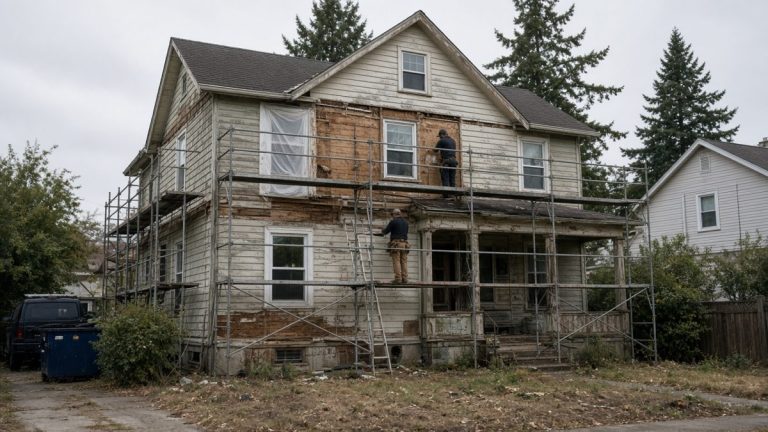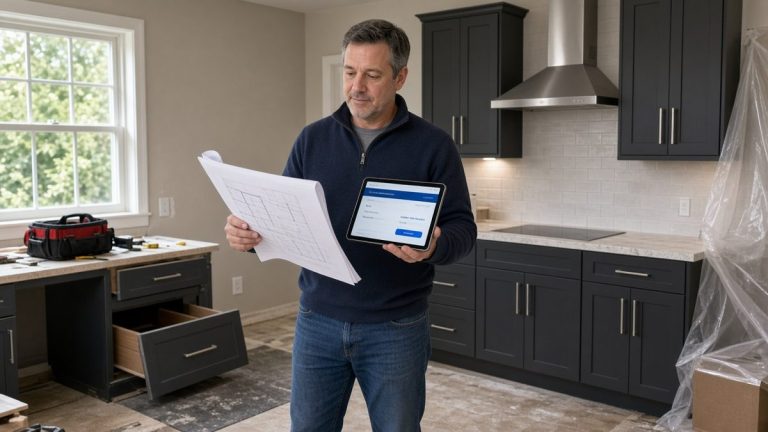
If you have built equity in your home, a second mortgage lets you borrow against it without replacing your existing first mortgage. Homeowners use second mortgages to pay for renovations, consolidate high-interest debt, cover education costs, or handle large expenses. Because your home secures the loan, it is important to understand the terms and risks before you borrow.
What a second mortgage is
A second mortgage is a loan secured by your home that is subordinate to your first mortgage. If you sell the home or go through foreclosure, the first mortgage is paid first, and the second mortgage lender is paid from what remains. Because the second lender takes more risk, interest rates on second mortgages are usually higher than on first mortgages, though often lower than on credit cards or unsecured personal loans.
The two most common types are home equity loans and home equity lines of credit.
Home equity loans
A home equity loan provides a lump sum at closing. You repay it over a fixed term, commonly 5 to 30 years, usually at a fixed interest rate with equal monthly payments.
Best for:
- One-time expenses with a known cost
- Borrowers who want predictable payments
Home equity lines of credit
A HELOC is a revolving line of credit. You can borrow, repay, and borrow again during a draw period, often 10 years, then enter a repayment period, often 10 to 20 years.
Key features:
- Interest rates are usually variable, tied to an index such as the prime rate.
- During the draw period, many HELOCs require interest-only payments.
- Payments can rise significantly when the repayment period begins.
- Some lenders allow you to convert part of the balance to a fixed rate.
Best for:
- Ongoing or uncertain expenses, such as a multi-phase renovation
- Borrowers who want flexibility
Piggyback loans
Some buyers use a second mortgage at purchase, such as an 80-10-10 structure, to avoid private mortgage insurance or jumbo loan limits. This is sometimes called a piggyback loan.
How much you can borrow
Lenders generally look at your combined loan-to-value ratio (CLTV), which is the total of all loans secured by the home divided by its appraised value. Many lenders cap CLTV around 80% to 85%, though limits vary.
For example, if your home is worth $400,000 and you owe $240,000 on your first mortgage:
- 85% of $400,000 is $340,000.
- Subtract the $240,000 first mortgage.
- You might be able to borrow up to $100,000.
Lenders also consider your credit score, income, and debt-to-income ratio.
Costs
Second mortgages can involve:
- Appraisal fees
- Origination fees
- Title search and title insurance
- Recording fees
- Annual fees for some HELOCs
- Early closure fees if you close a HELOC within a few years
Some lenders advertise no closing costs but may charge a higher rate or require you to repay costs if you close early. Compare the APR and total costs.
Interest deductibility
Interest on a home equity loan or HELOC may be deductible if you itemize and use the funds to buy, build, or substantially improve the home that secures the loan, subject to the overall limit on mortgage debt. Under the 2017 tax law, the limit is $750,000 of acquisition debt for most filers ($375,000 if married filing separately) for loans taken after December 15, 2017, and the 2025 tax law made that limit permanent. Interest is generally not deductible if you use the money for other purposes, such as paying off credit cards or buying a car.
Your right of rescission
Under the federal Truth in Lending Act, when you take out a home equity loan or HELOC secured by your principal residence, you generally have a right to cancel within three business days after closing, receiving the required disclosures, or receiving the notice of your right to cancel, whichever is latest. Lenders typically do not release funds until this period ends.
Second mortgage vs. cash-out refinance
A cash-out refinance replaces your first mortgage with a larger loan and gives you the difference in cash. Compare:
| Factor | Second mortgage | Cash-out refinance |
|---|---|---|
| First mortgage rate | Unchanged | Replaced with new rate |
| Closing costs | Usually lower | Typically higher, based on full loan |
| Number of payments | Two | One |
| Best when | Your first mortgage rate is low | Current rates are similar or lower than your existing rate |
If your existing mortgage has a low rate, a second mortgage may let you keep it.
Risks
- Foreclosure: Failing to repay can put your home at risk.
- Variable rates: HELOC payments can increase when rates rise.
- Payment shock: HELOC payments can jump at the end of the draw period.
- Falling home values: If prices drop, you may owe more than the home is worth, making it hard to sell or refinance.
- Frozen lines: Lenders can freeze or reduce HELOC limits in some circumstances, such as a significant decline in home value.
- Debt cycle: Using home equity to pay off credit cards without changing spending habits can lead to more debt.
An example
Suppose you take a $60,000 home equity loan at 8% for 15 years to renovate your kitchen and bathroom. The monthly payment would be about $573. Over 15 years, you would pay about $43,000 in interest. If you instead used a HELOC with interest-only payments of about $400 per month at the same rate during a 10-year draw period, your payment would rise substantially when the repayment period begins, since you would then repay the full $60,000 over the remaining term.
How to apply
- Check your credit and correct errors.
- Estimate your equity using recent sales or an online estimate.
- Compare offers from banks, credit unions, and online lenders.
- Gather documents, such as pay stubs, tax returns, and mortgage statements.
- Review the Loan Estimate or HELOC disclosures carefully.
- Close and use your right of rescission if you change your mind.
Alternatives
- Personal loans, which do not put your home at risk
- 0% balance transfer credit cards for short-term needs
- Saving up for planned projects
- Government programs for energy efficiency or repairs
Qualifying requirements
Lenders typically evaluate:
- Credit score: Many lenders look for scores in the mid-600s or higher, with the best rates for higher scores.
- Debt-to-income ratio: Lenders compare total monthly debt payments, including the new loan, with gross monthly income. Many prefer a ratio of 43% or lower, though some allow more.
- Equity: You generally need meaningful equity remaining after the loan.
- Income and employment: Pay stubs, W-2s, or tax returns verify ability to repay.
- Property type and occupancy: Rates and limits may differ for second homes and investment properties.
Using a second mortgage for debt consolidation
Replacing high-interest credit card debt with a lower-rate home equity loan can reduce interest costs, but it converts unsecured debt into debt secured by your home. If you fall behind, you risk foreclosure instead of collection calls. Consider this option only if you have a plan to avoid running up new balances.
Frequently Asked Questions
Is a HELOC a second mortgage?
Yes, when it is secured by your home behind a first mortgage, a HELOC is a type of second mortgage.
How much can I borrow with a second mortgage?
Many lenders allow combined loans up to about 80% to 85% of your home’s value, depending on credit and income.
Is second mortgage interest tax-deductible?
It may be if you itemize and use the funds to buy, build, or substantially improve the home, within mortgage debt limits.
What happens to a second mortgage if I sell my house?
It must be paid off from the sale proceeds after the first mortgage.
Can I cancel a home equity loan after closing?
For a loan on your principal residence, you generally have three business days to cancel under the Truth in Lending Act.
This article is for general informational purposes only and is not legal, medical, tax, or financial advice. Rules vary by state and change over time; confirm details with the relevant agency or a licensed professional.