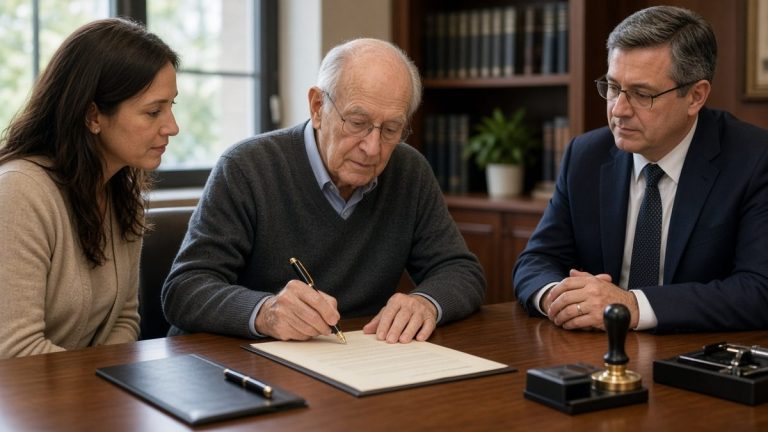
For many families, the house is the most valuable asset in the estate, and it is often the asset most likely to be stuck in probate after an owner dies. In many states, a simple document called a transfer on death deed can let real estate pass directly to a chosen beneficiary without probate. It is inexpensive, revocable, and leaves the owner in full control during life. This guide explains how it works, where it is available, and when another tool may be better.
What a transfer on death deed is
A transfer on death deed, also called a TOD deed or, in some states, a beneficiary deed, is a deed that names one or more beneficiaries to receive real estate when the owner dies. Until death, the deed has no effect on ownership. The owner can live in, sell, refinance, or mortgage the property and can revoke or change the deed at any time without the beneficiary’s consent. At death, the property passes to the beneficiary outside probate, similar to a payable-on-death bank account.
Where it is available
TOD deeds are authorized by statute in roughly 30 states and the District of Columbia, many of them through versions of the Uniform Real Property Transfer on Death Act. States that permit them include, among others, Arizona, California, Colorado, Illinois, Minnesota, Missouri, Ohio, Oregon, Texas, Virginia, Washington, and Wisconsin. Some large states, including New York and Florida, do not offer a standard TOD deed, although Florida and a few others recognize an enhanced life estate deed, often called a lady bird deed, that can achieve a similar result. Laws change, so check your state’s current statute or ask a local attorney.
Key features
- Revocable. The owner can cancel or change it by recording a revocation or a new deed.
- No present interest for the beneficiary. The beneficiary has no rights while the owner is alive, so the property is not exposed to the beneficiary’s creditors or divorce during that time.
- No gift during life. Because nothing transfers until death, signing the deed generally is not a taxable gift.
- Step-up in basis. Because the property is included in the owner’s estate, the beneficiary generally receives a stepped-up tax basis equal to fair market value at death, which can greatly reduce capital gains tax if the beneficiary later sells.
- Must be recorded before death. In most states, the deed must be signed with formalities like an ordinary deed and recorded in the county land records before the owner dies. An unrecorded TOD deed found in a drawer is generally ineffective.
How to create one
- Confirm your state allows TOD deeds and obtain the correct form, often available from the county recorder or a state bar association.
- Identify the property using its full legal description from your current deed, not just the street address.
- Name beneficiaries clearly, and consider naming alternate beneficiaries in case a primary beneficiary dies first.
- Decide how multiple beneficiaries share, such as equally as tenants in common.
- Sign before a notary, and in some states before witnesses.
- Record the deed with the county recorder’s office and pay the recording fee.
- Keep copies and tell your executor or beneficiaries where to find them.
What happens at death
After the owner dies, the beneficiary usually records a certified copy of the death certificate and, in some states, an affidavit with the county. Title then passes to the beneficiary. No court involvement is required in most cases, which can save months and significant fees.
Limits and risks
Mortgages and liens
A TOD deed does not wipe out debts on the property. The beneficiary receives the property subject to any mortgage or liens. Federal law, through the Garn-St. Germain Act, generally prevents lenders from calling a residential mortgage due solely because the home passes to a relative at death, but the loan must still be paid.
Creditors and Medicaid
In many states, property passing by TOD deed can still be reached by the owner’s creditors and by the state’s Medicaid estate recovery program if the estate’s other assets are insufficient. Rules differ, and some states expand Medicaid recovery to non-probate assets. If long-term care is a concern, talk with an elder law attorney.
Beneficiary problems
If a beneficiary dies before the owner and no alternate is named, the share may lapse and pass under the owner’s will or state law, possibly requiring probate after all. If a beneficiary is a minor, a court may need to appoint a guardian or conservator to manage the property. If a beneficiary has creditors, receives public benefits, or is going through a divorce, an outright transfer can create problems that a trust could avoid.
Co-owners
For property owned jointly with right of survivorship, the TOD deed usually takes effect only after the last surviving owner dies.
Conflicts with a will
In most states, a recorded TOD deed controls over a will. A later will cannot revoke a TOD deed unless the state allows it, so update the deed itself if your plans change.
Transfer on death deed versus living trust
| Feature | TOD deed | Revocable living trust |
|---|---|---|
| Cost to set up | Low; a form and recording fee | Higher; attorney drafting and retitling assets |
| Avoids probate | For the specific property | For all assets properly titled in the trust |
| Handles incapacity | No | Yes, a successor trustee can manage assets |
| Flexible distributions | Outright transfer | Can hold assets for minors or beneficiaries with special needs |
| Availability | Only in states that allow it | All states |
| Multiple properties in different states | One deed per property, if each state allows | One trust can hold all, avoiding multiple probates |
A TOD deed can be an excellent tool for a single home passing to adult children. A trust may be better for complex families, beneficiaries who need oversight, or property in several states.
Common mistakes
- Using a TOD deed in a state that does not recognize it.
- Failing to record the deed before death.
- Not naming alternate beneficiaries.
- Forgetting to coordinate the deed with the rest of the estate plan, leaving the executor without funds to pay estate debts.
- Naming a beneficiary who receives means-tested benefits, which can jeopardize eligibility.
A simple example
Maria, a widow in a state that permits TOD deeds, owns her home outright and has two adult children. She completes her state’s TOD deed form naming both children as equal beneficiaries, with each child’s own children as alternates. She signs before a notary and records the deed with the county for a small fee. She continues to live in the home, pays the property taxes, and later refinances to replace the roof without needing her children’s signatures. When Maria dies, her son records a certified death certificate and the affidavit required in her county, and the house passes to both children without a probate case. Because their basis is stepped up to the home’s value at her death, selling it soon afterward produces little or no capital gain.
Tax and insurance details
Recording a TOD deed usually does not trigger a property tax reassessment or a transfer tax during the owner’s life, because no transfer occurs until death. Whether a reassessment happens at death depends on state law; some states offer exclusions for transfers between parents and children. The owner should keep homeowners insurance in his or her own name, and beneficiaries should arrange their own coverage promptly after the transfer.
Frequently Asked Questions
What is a transfer on death deed?
A recorded deed that names a beneficiary to receive real estate automatically at the owner’s death, without probate, while the owner keeps full control during life.
Can I change or revoke a transfer on death deed?
Yes. You can revoke it or replace it at any time by recording a revocation or new deed, without the beneficiary’s consent.
Does a TOD deed avoid taxes?
It does not avoid estate tax, but because the property is included in your estate, beneficiaries generally receive a stepped-up basis that can reduce capital gains tax on a later sale.
Which states allow transfer on death deeds?
About 30 states and Washington, D.C. Some states, such as New York, do not; others like Florida use a lady bird deed instead.
Does a TOD deed protect my home from creditors or Medicaid?
Not necessarily. Many states allow creditors and Medicaid estate recovery to reach property passing by TOD deed.
This article is for general informational purposes only and is not legal, medical, tax, or financial advice. Rules vary by state and change over time; confirm details with the relevant agency or a licensed professional.